
The Hidden Danger in Your Home: Button Batteries
They may be small, but button batteries can cause severe internal burns within hours. These small coin size batteries can be hidden in car keys, tv remotes, kitchen scales, light up kids toys and more.
Why are button batteries dangerous?
Due to their small size and shiny appearance, they are often attractive to little hands and can easily become lodged in the throat or ears and nose. Button batteries, if swallowed can cause severe internal burns and even death.
Button batteries come in a range of different sizes. While button batteries and coin batteries are often used interchangeably there are slight shape differences between the two, but both pose a deadly risk if swallowed or inserted into the nose or ears.
Once a button battery interacts with a child's saliva or bodily fluids, this causes a chemical reaction. The saliva causes an electrical current with the battery which produces caustic soda (sodium hydroxide), a strong substance that is the same as drain cleaner. This can burn a hole through a child's oesophagus in as little as two hours. This can cause severe internal injuries and even death.
Around 14 tamariki are taken to Starship Hospital annually with injury related to button batteries.
Common Places Button Batteries are Found
You might not be aware of how many common household items can hold button batteries. They can be commonly found in kitchen scales, calculators, heater remotes, car and garage key remotes, tea light candles, musical birthday cards, digital thermometers, watches and hearing aids.
While some button battery brands have bitter technology, designed to taste unpleasent for toddlers and children to hold in their mouth; it's still so important to make sure these aren't accessible in the first place. Placing button batteries up high and out of reach, ideally in a storage container is best practice.
It's good practice to reguarly check your spaces for any button batteries. After birthday parties, holiday celebrations are good reminders to check for any new button batteries that may have entered your home or may be not up high and out of reach.
Taakiri's Button Battery Story
Taakiri, swallowed a button battery on her first birthday after finding a loose battery in a container. The battery was lodged in her oesophagous for up to five hours before it was removed.
The battery left Taakiri with internal burns and lifelong damage. Now, as an 11 year old she receives regular ongoing medical treatment from Starship Hospital, where she has a dilatation procedure that stretches her oesphagous to allow her to eat due to the internal scar tissue.
Her message is simple, don't let tamariki get a hold of button batteries.
NZ Safety Compliance: What Parents Should Know
Button battery safety recommendations in Aotearoa are voluntary and doesn't mandate secured compartments, child resistant packaging and warning labels unlike in Australia and the United States.
Australian and Unites States Standards require that:
Products must have compartments secured with screws or fastners to prevent children from opening.
Products must be tested to see that batteries are not able to drop out during use or forseeable misuse
Button and coin batteries sold separately must be in child resistant packaging
Products and packaging must feature clear keep our of reach of children warning
However, policy in Aotearoa advises that items are designed to require button batteries meet two crtieria to be considered safe. It also encourages
1. Secure battery compartment:
Comparments should have two mechanisms for release and both must be activated for the button battery comparment to open.
2. Use and abuse test:
Products should pass tests to help ensure that with expected everyday use, battery compartments cannot be accidentally opened or become insecure; or result in the release of the batteries.
How to shop safely online
There is a mandatory safety standard for button batteries in toys for 0-3 year olds in NZ, however with global trade and online shopping, this is not always adhered to. Therefore, it's important when buying kids toys and decorations to check items before you purchase to see if they contain a button battery as safety precautions are not always followed.
Look for information in the product description to see if an item contains a button battery. It is safest to avoid these if possible and purchase alternative items.
Battery compartments should require a tool to remove, such as a small screwdriver and have to include two simultaneous movements to open.
As soon as an item arrives, inspect the container and make sure that it is not broken or flimsy.
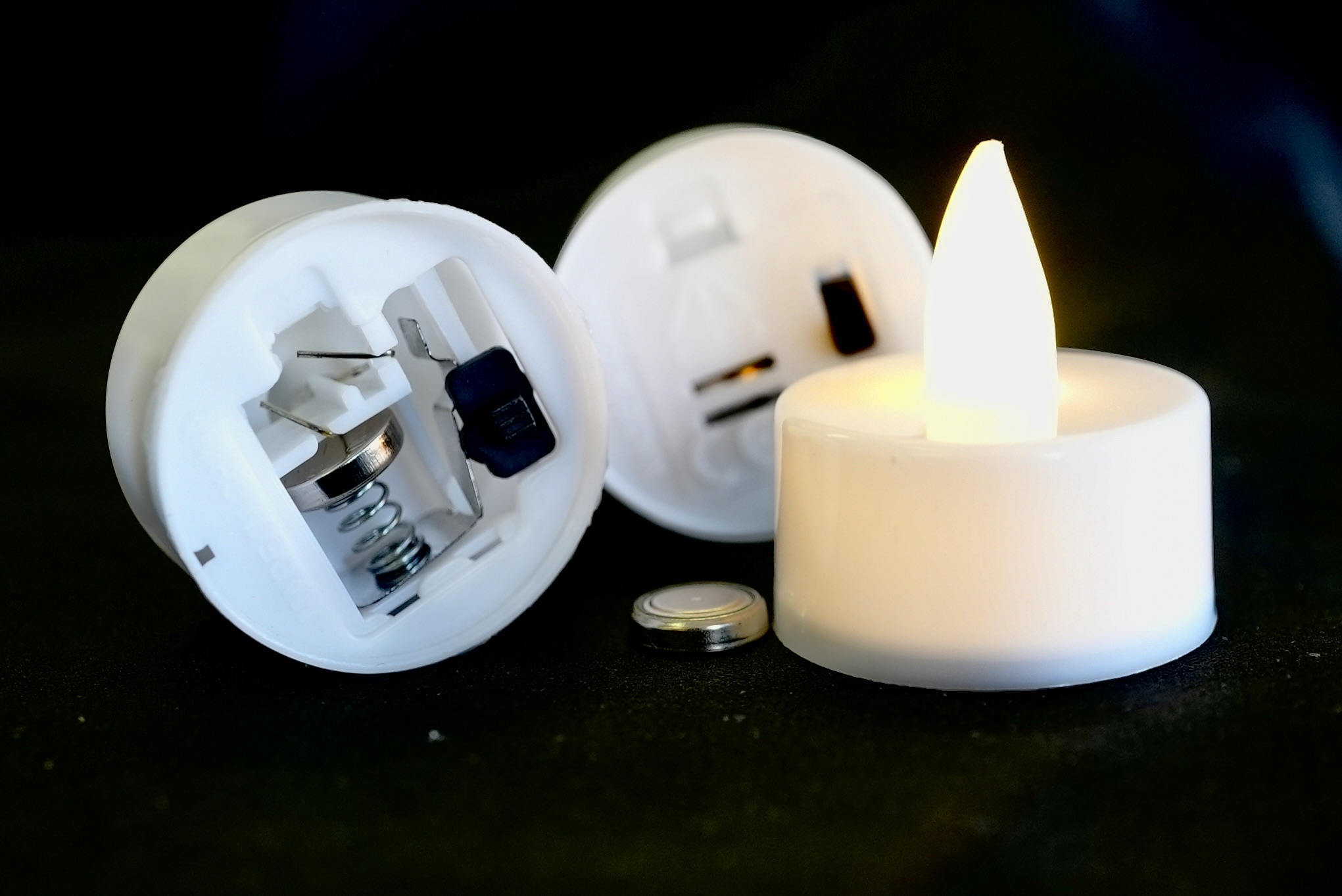
Tea light with open button battery compartment
How to Prevent Button Battery Injuries
If you can, finding button battery alternatives is the safest option for your tamariki.
If you have to have a button battery item in your home, it's important to make sure that any compartments and screws are secured tightly so that button batteries aren't at risk of falling out. We recommend putting a piece of tape over compartments, such as on a TV remote as an extra precaution.
Do a sweep of your house and make sure that any loose or button battery packets are stored up high and out of reach, ideally in a contained space.
When button batteries have gone flat, dispose of them by putting a piece of tape around the battery and disposing. This helps make them harder to swallow and can help prevent injury.
Even if button batteries no longer power your device, these can still have enough voltage to cause injury.
You can get rid of button batteries by returning them to local hardware stores such as Bunnings, Mitre 10, recycling centres, community centres, and some regional council offices. See more information on safe disposal here
How to talk to older children about button batteries
Letting older children know about the dangers of button batteries is also helpful in protecting younger children.
Teach older children about why they are not toys and encourage them to always alert an adult if they find a loose battery.
Be aware of what devices or items your older tamariki might own or purchase that could contain button batteries. This could include LED lights in bedrooms, watches, headphones, game consoles, remotes.
For tween and older teens, encourage them to store packets away safely up high and out of reach of younger siblings and keep their button battery containing devices out of reach and sight.
For more info on our button battery campaign such as what to do if your child swallows a button battery see the link here.