Preventing Injuries From Objects at Home: Keeping Tamariki Safe
Injuries from objects, also called inanimate mechanical forces saw 2,028 tamariki hospitalised between 2019 - 2023.
The most common reason was from cut or pierce injuries, followed by being struck against or being struck by objects, and being caught, crushed, jammed, or pinched between objects.
The age group that is most affected by these injuries are 0-4 years, with males making up the greater number of hospitalisations compared to females.
What are injuries from objects?
Injuries from objects involve being struck, cut, or otherwise injured by an object. It also includes being caught, crushed, jammed, or pinched between objects.
What items commonly cause injury?
Examples include injuries from sports equipment, jammed fingers and toes, cuts from knives, glass and crush injuries from falling or unstable furniture.
Making your whare safe
Furniture:
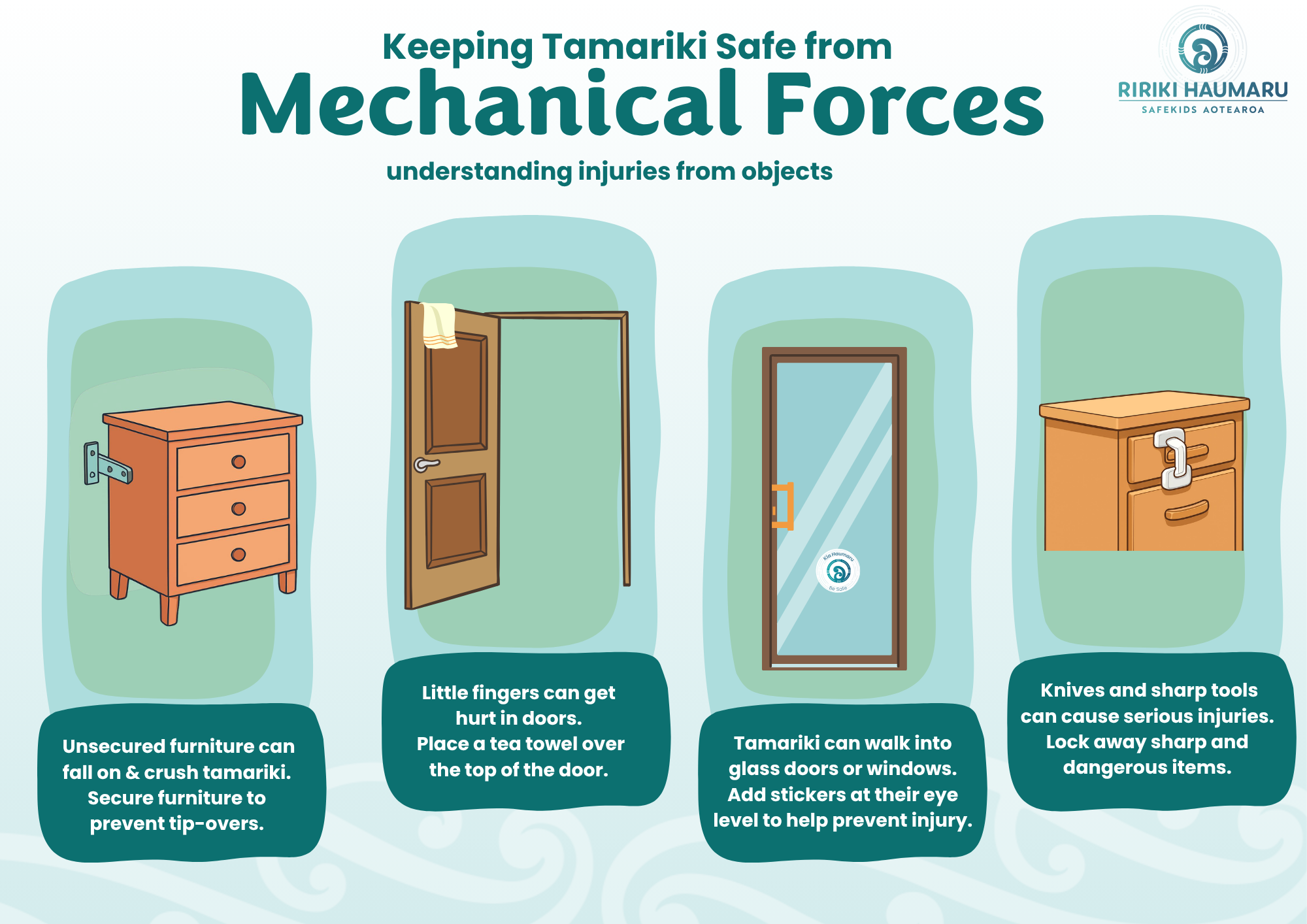
Firmly mount TVs to a wall or a piece of furniture or place older models onto low stable furniture that can hold the weight. You can secure the base with screws for extra stability.
Use brackets, braces or wall straps to secure unstable or top-heavy furniture to the wall such as dressers, tallboys, bookcases and mirrors. It's also a good idea to put stops on dresser drawers to prevent them from being fully pulled out.
Rearrange drawers and shelves so that heavy items are lower down.
If you have young children, consider using drawer locks so they can't be opened and used to climb on.
Store heavy items lower down in bookcases, shelves or wardrobes.
It's best not to place tempting items such as favourite toys, food, on top shelves in plain sight. Put these out of sight so they aren't tempted to climb furniture to reach these.
Kitchen:
Store knives, forks, scissors, and other sharp utensils in a locked drawer.
Keep glasses, glass bowels, glass dishes stored up high and out of reach.
Store appliances with sharp blades like blenders, food processors, electric can openers, in locked cabinets or up high.
Have your baby or toddler a safe distance away from the kitchen when you unload dishwashers so they can't grab sharp utensils or glasswear when open.
Have conversations with young children about how kitchen equipment can be dangerous and make sure they are out of reach when not in use. Teach older children how to safely use kitchen equipment.
Around the house:
Use safety glass in windows and doors. Buy furniture that uses safety glass if possible or put stickers on glass doors to make sure their visible to tamariki.
Check for and remove sharp and pointed objects at home and in play areas.
Operate ride-on mowers well away from children. This equipment is also not safe for children to ride on.
Make sure to actively supervise children when around garden tools and equipment.
Hang a tea towel over the tops of doors to keep them ajar.
First Aid
Bleeding:
Typically, external bleeding is minor and includes small cuts and grazes.
Sometimes bleeding can be serious and life threatening. If there is a lot of bleeding and it doesn't stop when you apply pressure call 111 for an ambulance.
Crush Injuries:
Call 111 immediately if a crush injury occurs.
Crush injuries usually occur when a heavy weight crushes a part of a child's body.
If possible, remove the heavy object off the person.
Stop any bleeding by pressing with a clean cloth.
Fractures:
Visit a doctor urgently if you think your child may have broken a bone and if your child is in a lot of pain, call an ambulance.
Keep the injured arm or leg still. You can support the injured area with a pillow or sling. Raise the leg higher than the heart to help reduce swelling.
You will need to give your child some pain relief. You can give paracetamol or ibuprofen, remember to follow the dosage instructions on the medication.
Foreign body in wound:
If there is a lot of bleeding, call an ambulance.
If the object is large like a knife or screwdriver DO NOT remove it.
You can treat a minor foreign body wound by doing the following:
If there is an object in the wound like a small nail or staple near the surface of the skin, remove it.
Use padding around the object to stop it moving around. Press firmly either side of the object to stop the bleeding.
A puncture wound:
You can treat a puncture wound by doing the following:
Wash your hands with soap before and after cleaning.
Clean the wound with lots of running water and allow to dry in fresh air.
Cover with a clean bandage.
Check with your doctor to see if they need a tetanus injection.
Tetanus:
Tetanus is an infection caused by bacteria that can enter your body through broken skin or wounds. These bacteria can produce a toxin which causes muscles to stiffen, nerve irritation and painful muscle spasms, sometimes a temperature and sweating, and difficulty breathing.
This can be caused by:
Wounds that have been contaminated with dirt, soil or manure.
Wounds that have foreign objects like nails or wood splinters.
Open fractures with exposed bone.
After a cut or puncture injury your child might need a tetanus injection. Deep wounds containing dirt or foreign objects are most likely to be infected with tetanus. Contact your doctor or nearest A&E about getting a tetanus vaccination after an injury.
A booster is recommended if it is more than 10 years since your child's last tetanus injection, or 5 years if the wound is dirty, contaminated or deep. For more information on vaccine advice, you can call 0800 IMMUNE.
Grazes:
A small cut or graze can usually be treated at home. You can do the following to treat a graze:
Wash your hands with soap before and after cleaning.
Clean the wound with lots of running water and dry with a clean cloth.
Apply antiseptic ointment (like savlon or betadine) only if the wound is dirty.
Cover with a clean bandage.
Download our Button Battery Safety PDF