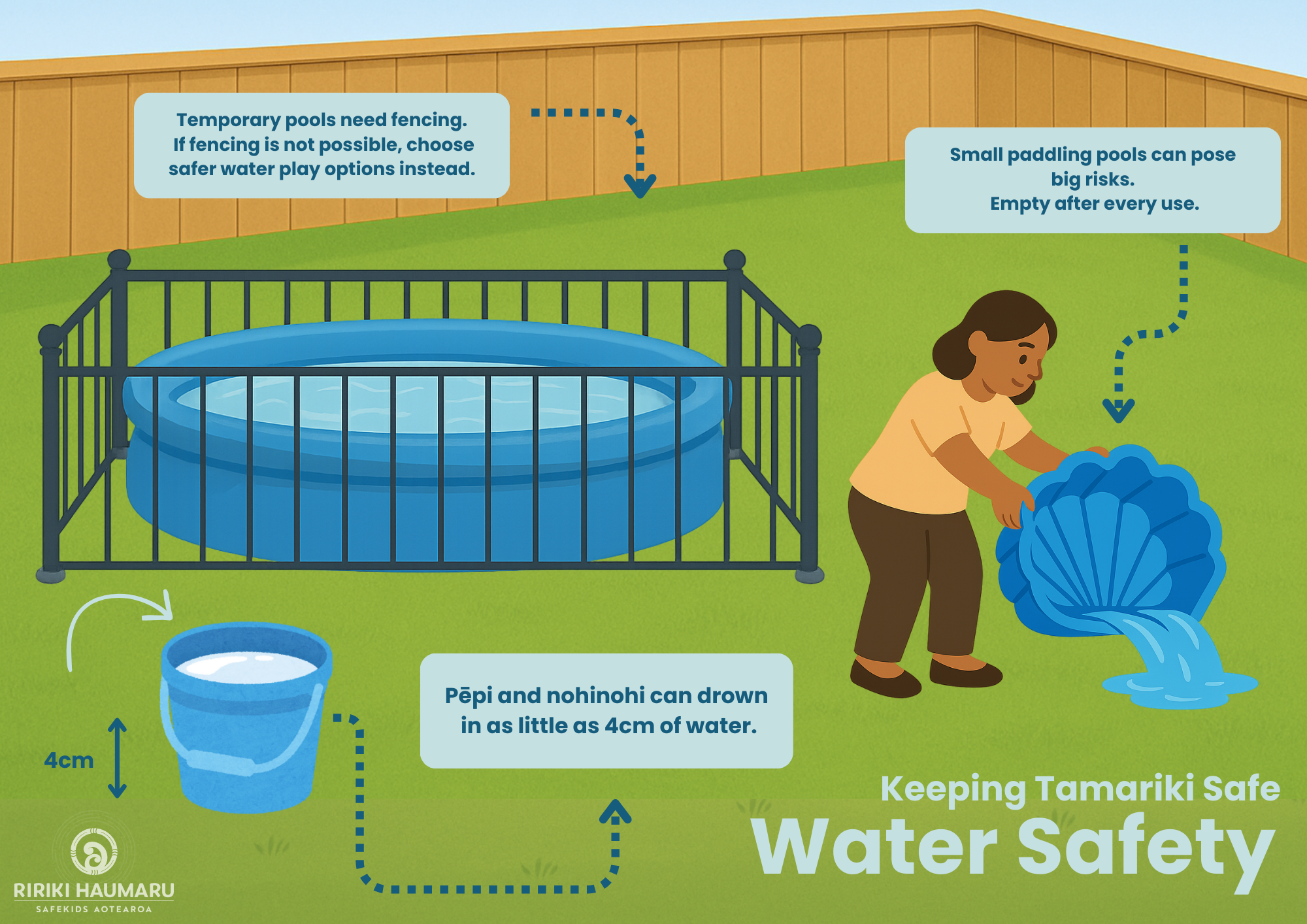
Water Safety
Tamariki Drowning in the home
Between 2016 to 2020, 20 drownings occured in the home environment with ten child under the age of five drowning in home pools, one of these being an inflatable pool.
Children under the age of 5 are the most at risk, with European and Māori tamariki making up most of the drowning deaths. Drowning is unfortunately the leading cause of death of New Zealander's under the age of 5.
The good news is that drowning from home pools is preventable through the use of fencing, and active supervision.
Pool Fencing and Temporary Pools
All residential pools that can hold 40cm (400mm) or more of water require a physical barrier to restrict access to unsupervised children, this includes temporary pools.
If you have a temporary pool or are looking to purchase a temporary pool, you will need to install a barrier or fence. Installing a barrier or fence might require a building consent from your local council.
All private pools are required to have a fencing and a safety inspection every three years, according to Auckland Council.
Make sure that play equipment or things children can easily climb on, like rocks or chairs are not near pool fences.
If you can't install a barrier, look to other water play activities such as your local public swimming pool, at home sprinklers and slip and slides.
Temporary pools that hold less than 40cm of water should be emptied out and stored upside down after every use.
Other Water Hazards Around the Home
Apart from pools, there are other drowning hazards to be aware of in the home that tamariki will need extra protection from
Check around your whare and outside for anything that can hold water or collect rainwater. Empty water from buckets and containers as soon as you've finished using them. Turn these upside down so water can't collect.
Water risks around the home:
Toilets
Fish ponds
Stock troughs
Buckets
Drinking ponds
Ornamental containers
Close doors to laundry, bathrooms or toilet doors.
Baths
To keep tamariki safe around baths, follow these safety tips:
Make sure you have everything in the bathroom before your child is in the bath, don't leave a baby in the bath by themselves
Watch the bath as it fills and empty as soon as your child is out
Stay within arm’s reach of your child in the bath at all times
Put the bath plug up high and out of reach when not in use
Remove toys from the bath
Water Safety Tips
Remember, babies and toddlers can drown in less than 4cm of water.
Alway's keep tamariki within arms reach
Avoid distractions while supervising tamariki playing in or near water
Avoid using temporary pools
Always empty buckets and paddling pools when not in use.
Download our Water Safety Guide PDF